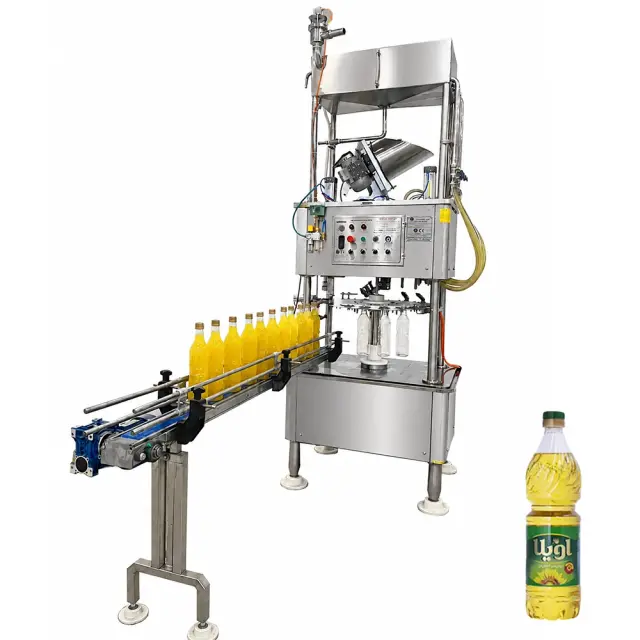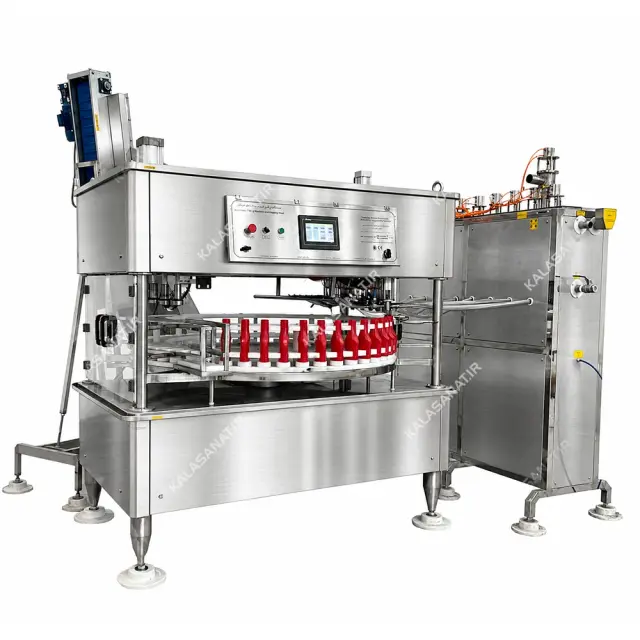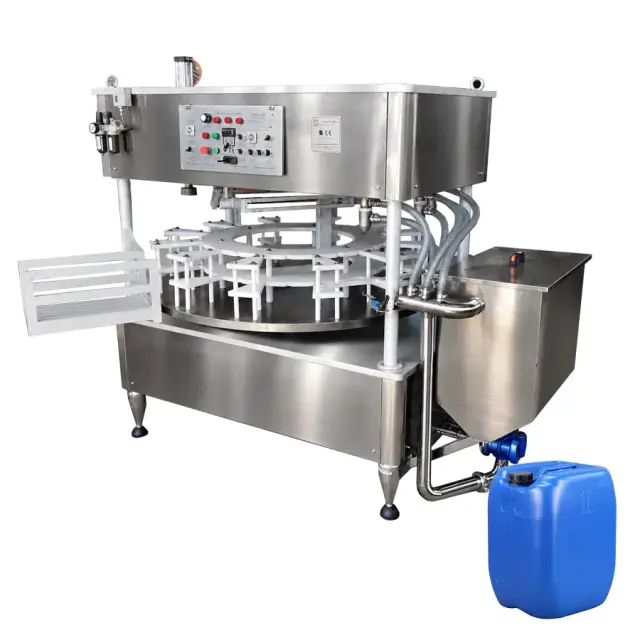
20-Liter Industrial Oil Jerrycan Filling Machine
Request a Quote
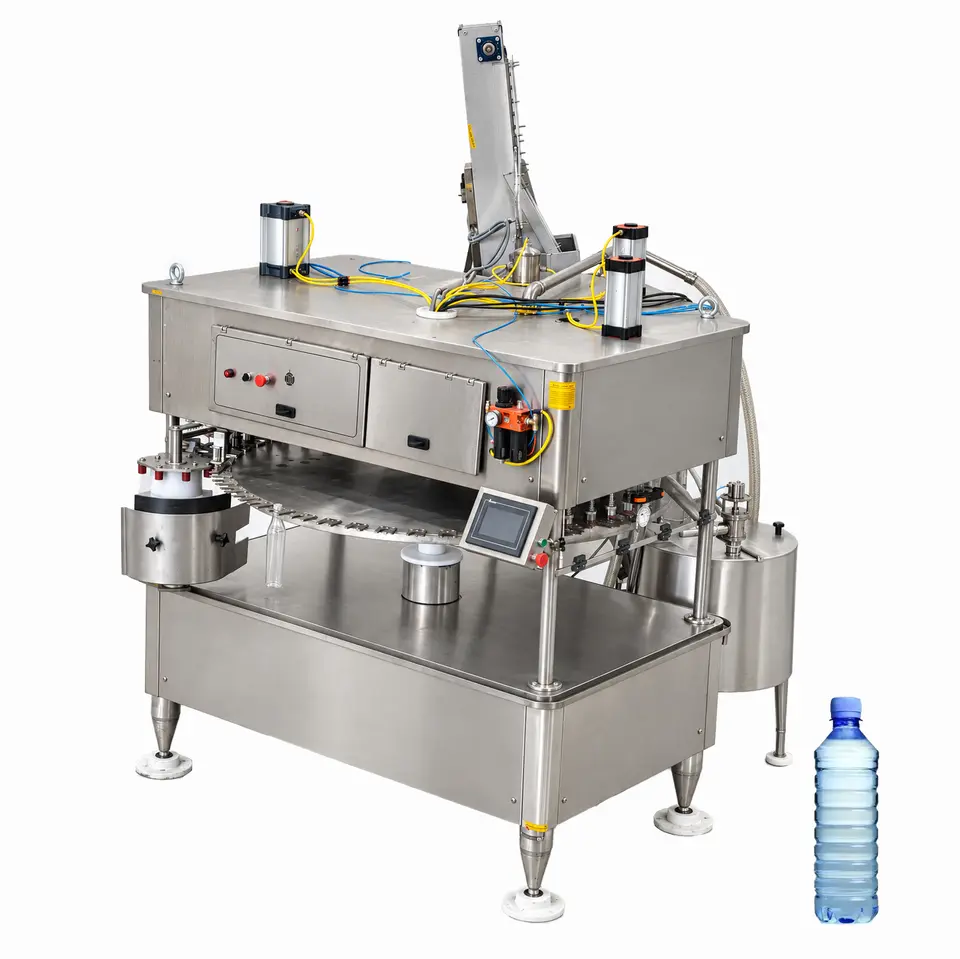
In short
The 16-nozzle monoblock is a fully automatic machine for filling, capping, and sealing PET bottles with non-carbonated liquids. It features a rotary system, PLC control, and overflow nozzles, with a capacity of up to 4000 bottles per hour depending on bottle size and product type.
The 16-nozzle monoblock is a fully automatic machine for filling, capping, and sealing PET bottles with non-carbonated liquids. It features a rotary system, PLC control, and overflow nozzles, with a capacity of up to 4000 bottles per hour depending on bottle size and product type.
Pricing depends on the required specification.
Built to order after a signed contract
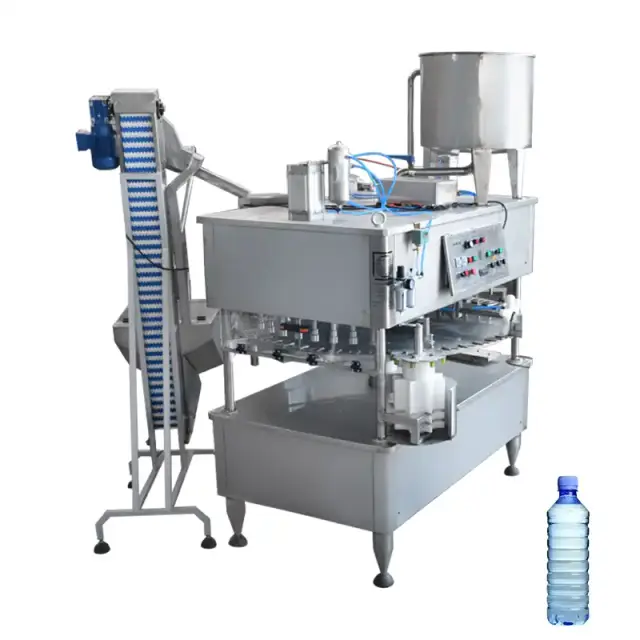
16-Nozzle Monoblock Machine is a fully automatic machine designed for filling, capping, and sealing PET bottles with non-carbonated liquids. It utilizes a rotary system, PLC control, touch HMI, and overflow nozzles to ensure precise and uniform filling of various liquid products.
The 16-nozzle monoblock, with its all-stainless steel structure and industrial design, is an ideal choice for production and packaging lines of beverages, food products, pharmaceuticals, detergents, and other non-carbonated liquids.
This machine is suitable for packaging various liquids in PET bottles, including:
The type of nozzle, filling method, and pump can be selected and adjusted based on the viscosity, temperature, foaming, and characteristics of the product.
The capacity of the machine depends on factors such as bottle volume, type of liquid, product viscosity, and production line conditions.
The maximum declared capacities for this machine are:
The 16-nozzle monoblock is equipped with overflow nozzles. These nozzles have an air discharge path and product return to the tank, designed to achieve uniform filling levels in PET bottles.
The overflow system is suitable for products requiring a consistent filling level and uniform appearance in the bottle.
Each nozzle is also equipped with a bottle presence sensor. If a bottle is not in place, the nozzle valve does not open, preventing product waste.
The machine mechanism is designed as rotary and fully automatic, performing three main processes in one machine:
The integration of these processes reduces the required space, minimizes operator errors, and improves coordination of packaging stages.
The machine includes a bottle cap elevator system responsible for transferring and feeding caps to the capping section. This system automatically synchronizes with the machine's capping process.
Machine parameters are adjusted and controlled via PLC and touch HMI panel. The operator can adjust various machine parameters according to the product and bottle.
Some controllable settings include:
This control system simplifies machine operation and allows for more precise management of the packaging process.
To increase speed and improve product transfer, a open impeller pump suitable for food and dairy industries can be used. The pump capacity and specifications are selected based on the type of liquid, required flow rate, and process conditions.
The body and main parts of the machine are made of stainless steel 304, and the nozzles are made of stainless steel 316.
The use of stainless steel in the machine construction provides suitable resistance in industrial environments and allows for easier cleaning and maintenance of the equipment.
The machine is designed to reduce wear, simplify maintenance, and use economical consumable parts.
The 16-nozzle monoblock requires electrical and compressed air equipment for proper operation.
The actual compressor capacity should be determined according to the total air consumption of the line and auxiliary equipment.
The 16-nozzle monoblock can be connected to equipment before and after it in the packaging line.
The machine input can be connected to:
.
The monoblock output can be connected to a conveyor belt to transfer filled and sealed bottles to other packaging line machines such as labelers, date printers, and final packaging equipment.
Main consumable parts of the machine include:
These parts need periodic inspection and replacement based on the machine's usage.
| Specification | Value |
|---|---|
| Operation Type | Rotary, Fully Automatic |
| 500 ml Bottle Capacity | Up to 4000 bottles per hour |
| 1.5-Liter Bottle Capacity | Up to 3000 bottles per hour |
| Body Material | Stainless Steel 304 |
| Nozzle Material | Stainless Steel 316 |
| Control System | PLC + Touch HMI |
| Power Consumption | Three-phase, Approximately 7 kW |
| Air Pressure Consumption | 7 to 8 bar |
| Recommended Compressor Tank | Minimum 200 liters |
| Cap Transfer System | Cap Elevator |
| Dimensions | Length and Width 170 cm, Height 300 cm |
| Input Connection | Air Conveyor and Automatic Bottle Washer |
| Output Connection | Packaging Line Conveyor Belt |
| Weight | 800 kg |
This machine is suitable for filling and packaging various non-carbonated liquids in PET bottles, including water, non-carbonated beverages, fruit juices, syrups, liquid food products, certain pharmaceutical products, and detergents and industrial liquids. The product type should be evaluated for viscosity, foaming, and other process characteristics.
The filling system of this machine is of the overflow type. Overflow nozzles have an air discharge path and product return to the tank, suitable for creating uniform filling levels in bottles.
The price of the machine depends on factors such as its technical specifications, product type, bottle volume and dimensions, electrical and pneumatic component brands, pump, and custom features. For an accurate price, the production line specifications need to be reviewed.
Last updated: 14 November 2026